




Introduction
Making your home more energy-efficient isn’t just a trend—it’s a smart investment in your wallet and the planet. Eco-friendly appliances are at the heart of sustainable living. Whether you’re upgrading your kitchen or renovating your entire home, choosing the right green technology can significantly reduce your carbon footprint and utility bills. But with so many labels and claims, how do you know what truly makes an appliance eco-friendly?
This guide will help you navigate the world of energy-efficient appliances, from what features to prioritize to which certifications matter most. If you’re ready to go green at home, read on for practical tips that make eco-conscious choices easier than ever.
Why Go Green with Appliances?
Before diving into what to look for, let’s answer the big “why.” Here are the top reasons more homeowners are making the switch to eco-friendly appliances:
- Lower Energy Consumption: Energy-efficient appliances use less electricity and water, which directly reduces your monthly bills.
- Environmental Impact: Less energy use means fewer greenhouse gas emissions and less strain on natural resources.
- Smart Investment: While eco-friendly models may have a higher upfront cost, they save more in the long run through reduced utility expenses and often come with rebates or tax credits.
- Modern Features: Green appliances often include smart technology, better insulation, and longer-lasting parts.
What to Look for in Eco-Friendly Appliances
1. ENERGY STAR® Certification
The first thing to check? ENERGY STAR® labels. This government-backed symbol identifies products that meet or exceed federal efficiency standards. Appliances with this label typically consume 10% to 50% less energy than standard models without sacrificing performance.
Tip: Visit the official ENERGY STAR website for product comparisons and calculators to estimate savings.
2. Water Efficiency Ratings
If you’re buying dishwashers or washing machines, pay attention to water usage per cycle. Look for appliances that use less water without compromising cleaning power. Certifications like WaterSense indicate optimal water efficiency.
Pro Tip: A high-efficiency washing machine uses about 50% less water than a traditional model.
3. Size and Capacity Match
An oversized appliance may look impressive, but it’s often wasteful if you’re not using its full capacity. Choose the right size for your household needs. For example, a compact refrigerator may be more efficient than a large one that’s half-empty most of the time.
Key Point: Bigger isn’t always better. Go for fit over flash.
4. Smart Features for Smarter Energy Use
Modern eco-appliances often include smart sensors, programmable settings, and Wi-Fi controls. These help manage energy consumption by adjusting based on usage patterns.
- Smart thermostats optimize heating/cooling cycles.
- Load-sensing washers adjust water based on laundry weight.
- Dishwashers with eco-cycles save both water and electricity.
5. Inverter Technology
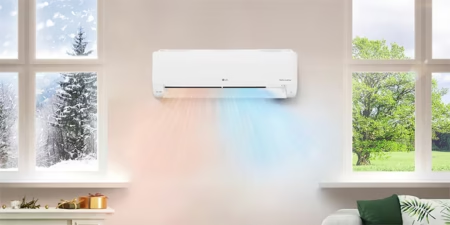
Appliances like refrigerators and air conditioners with inverter compressors are more efficient than traditional models. They maintain consistent temperature without frequently turning on and off, which reduces energy spikes.
6. Durability and Repairability
An eco-friendly appliance is one that lasts. Choose models from brands known for durability and with readily available replacement parts. Some manufacturers now offer modular designs that make repairing easier than replacing.
Bonus: A longer lifespan means fewer appliances end up in landfills.
7. Low or No Toxic Materials
Look for appliances made from BPA-free plastics, lead-free components, and non-toxic refrigerants (like R600a instead of CFCs or HFCs). These are better for both the environment and your health.
Best Types of Eco-Friendly Appliances to Upgrade First
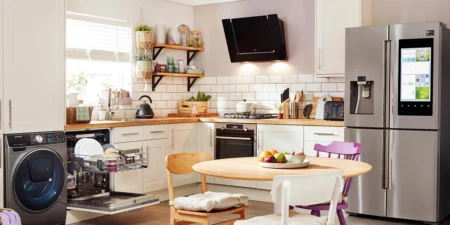
If you’re wondering where to start, focus on the home appliances that use the most energy:
- Refrigerators: These run 24/7, making efficient models essential.
- Washing Machines: Go for front-loading models—they use less water and detergent.
- Dishwashers: Choose ENERGY STAR-rated models with eco and half-load options.
- HVAC Systems: Upgrade to smart thermostats and energy-efficient heating/cooling units.
- Water Heaters: Tankless or solar-powered options are more efficient than traditional tanks.
Eco-Friendly Features by Appliance
| Appliance | Eco Features to Look For |
|---|---|
| Refrigerator | Inverter compressor, ENERGY STAR, LED lighting |
| Dishwasher | Eco wash cycles, soil sensors, low water use |
| Washing Machine | Load sensors, high spin speeds, cold wash option |
| Oven/Stove | Induction cooktops, programmable timers |
| Dryer | Moisture sensors, heat pump technology |
| HVAC | Variable-speed motors, smart controls, efficient filters |
FAQs
Q1: Are eco-friendly appliances really worth the cost?
Yes. While they may be pricier upfront, eco-friendly appliances save you money over time through lower utility bills and sometimes even rebates or tax incentives.
Q2: How can I verify if an appliance is truly energy-efficient?
Look for certifications like ENERGY STAR and WaterSense. You can also compare EnergyGuide labels, which show annual energy consumption and estimated costs.
Q3: Is it more eco-friendly to repair old appliances or buy new ones?
It depends. If the old appliance is highly inefficient and repair costs are high, replacing it with a new energy-efficient model may be greener in the long run. However, if the appliance still runs efficiently and can be repaired, fixing it avoids unnecessary waste.
Q4: Do smart appliances really save energy?
They can. Features like timers, usage tracking, and auto shut-off help reduce unnecessary energy use—especially when combined with good habits like running machines only with full loads.
Conclusion
Going green at home doesn’t mean giving up comfort or convenience. With the right eco-friendly appliances, you can enjoy the best of both worlds: modern features and sustainable living. Start by identifying the biggest energy users in your home and gradually replace them with efficient alternatives.
Look for key certifications, match the size to your needs, and choose durable, smart models that support long-term energy savings. Small changes add up. Every efficient appliance you bring home is a step toward a cleaner, greener future—for you and for the planet.